
Anxiety
Worry isn't a personality trait.
If your brain won't quit, that's treatable. Real evaluation, real options, no shaming.

Most days it sounds like this
Anxiety is your alarm doing its job, right up until it's going off over nothing.
When the alarm gets too touchy
Once it stops matching whatever's actually in front of you, you're sweating things that aren't happening and dodging stuff you'd rather not, the alarm still works fine, it's just way too touchy.
19%
of US adults meet criteria for an anxiety disorder in any given year.

The real damage
Your world shrinks one decision at a time.
What actually works
Exposure, plus meds when it's loud.
CBT and exposure have the most behind them, and an SSRI just turns the volume down enough that you can actually do that work instead of white-knuckling it.
Honest talk on benzos
They work fast, which is exactly why they wreck the people who lean on them.
#1
most common condition we deal with, and depression usually rides along with it.
A real person replies
Our care team gets back to you within a business day and gets you started.
What this is like
What working with us looks like
Telehealth or in person
Across Washington and Oregon, whichever actually fits the week you're having.
No-fluff on meds
SSRIs and SNRIs aren't happy pills, benzos aren't the move, and we'll tell you honestly which is which.
A real person, not a bot
Our care team reaches out within a business day, sorts the logistics, and matches you with the right clinician.
A real person replies
Enough time to figure out what's going on, instead of a conveyor belt and a quick script.
What It Actually Is
Anxiety is the appropriate response to threat. When it stops matching the actual threat (you're worrying about things that aren't happening, you're avoiding stuff you'd rather not avoid, sleep is wrecked, work is slipping) it's crossed into the territory where treatment actually helps. The alarm still works fine, it's just gone way too touchy for the situation you're in.
The thing it's not, it's not just who you are and you don't have to wear it forever. It's a system running too hot for the situation it's in. The biology is real, the symptoms are real, and pretending you can white-knuckle your way past the whole thing is what keeps you stuck the longest. So is going the other way and treating the anxiety as a permanent fact about you. Neither of those is the right read.
The choices about what you do next, those are yours. Treatment changes the math, it doesn't change who's driving.
When it's crossed the line
- Worry that won't quitYour brain churns on things that haven't happened and probably won't, all day, in the background.
- AvoidanceYou're dodging the party, the call, the flight, the presentation, and the world keeps shrinking around it.
- The body keeps scoreSleep is wrecked, you're wired but can't focus, tired but can't rest.

What This Looks Like in Real Life
Your heart races, palms sweat, you can't catch your breath, and the first few times you're convinced something is medically wrong (a lot of guys make at least one ER trip before someone names it a panic attack). Knowing what's actually going on doesn't make the next one feel less real, it just means you stop calling it a heart attack.
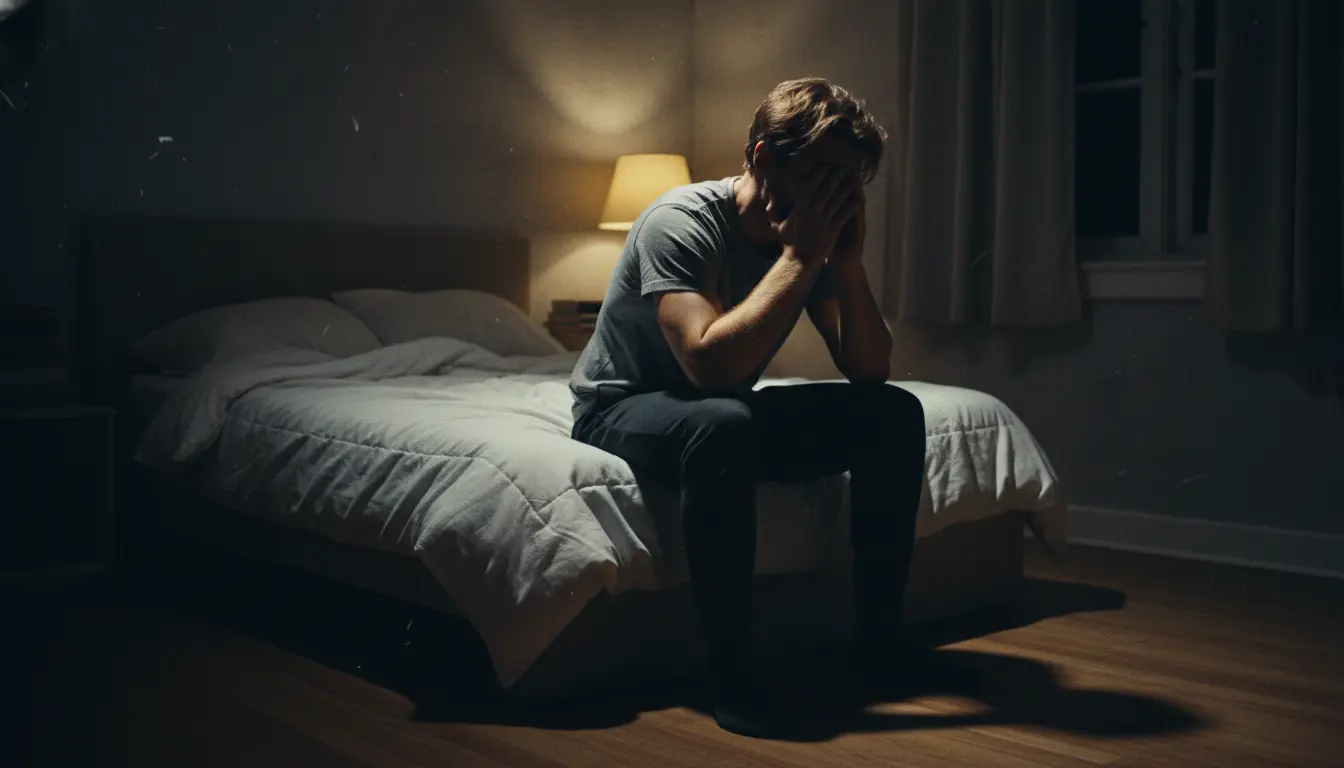
Then the avoidance starts. You skip the party, push back the presentation, dodge the phone call, white-knuckle through the flight or just don't fly. Every dodge teaches your nervous system that the thing you avoided was actually dangerous, so the next time around the anxiety is worse. Your world shrinks one decision at a time, and you start planning your life around what you can handle instead of what you actually want.
Other guys don't get the dramatic panic version, they just run with this low-grade dread humming in the background all the time, brain churning on things that haven't happened and probably won't. Tired but can't sleep, wired but can't focus, always waiting for something to go wrong. That's the same condition, it just looks quieter from the outside.
Two ways it shows up
- The panic versionRacing heart, no breath, the ER trip, and then the avoidance that builds around it.
- The quiet versionLow-grade dread humming all day, wired but can't focus, tired but can't sleep.
- Same conditionOne just looks louder from the outside than the other.
What it costs you
- WorkToo paralyzed to start things, or too distracted to finish them.
- RelationshipsIrritable from running on cortisol fumes, or quietly pulling back from anything that feels like too much.
- The bodyHeadaches, stomach problems, muscle tension, blood pressure drifting where you don't want it.
- The spiralYou get anxious about being anxious, and the shame around that keeps a lot of guys from ever picking up the phone.
How This Messes Up Your Life
Anxiety is greedy. It takes your energy, your sleep, your concentration, and your ability to be present with the people you actually like. Work suffers because you're either too paralyzed to start things or too distracted to finish them. Relationships suffer because you're irritable from running on cortisol fumes, or you're quietly pulling back from situations that feel like too much.
The body keeps the bill. Headaches, stomach problems, muscle tension, fatigue, blood pressure drifting in directions you don't want. Chronic anxiety isn't just a mental thing, it's a wear-and-tear thing, and the wear shows up in the labs eventually whether you go to the doctor about it or not.
The meta-anxiety is the part nobody warns you about. You start getting anxious about being anxious. You watch for the next wave, you feel weak for not being able to just handle it, and the shame around the whole thing is what keeps a lot of guys from picking up the phone to do something about it. That little spiral, anxious about being anxious, is usually the first thing that loosens up once treatment is actually working.
What Actually Works
Cognitive Behavioral Therapy (CBT, the structured talk-therapy approach that targets the thinking patterns that fuel the anxiety) has the most evidence and is the move for most cases. The active ingredient is exposure, you gradually put yourself back in the situations you've been avoiding, and your nervous system slowly figures out those situations aren't actually going to hurt you. That's not a pep talk, that's the part that does the actual work, and skip it and a lot of anxiety treatment just goes nowhere.
Medication helps when the anxiety is loud enough that you can't engage with the therapy work. SSRIs and SNRIs (the standard antidepressant classes that also work for anxiety) are first-line, they're not happy pills, they just turn the system's volume down enough that you can do the actual work. Some people need them for a stretch and come off, some do better staying on longer, that's a real conversation, not a one-size answer.
Benzos like Xanax and Ativan work fast and that's exactly why they get over-prescribed and exactly why they wreck people who use them too long. They make anxiety worse over time, they carry real dependence liability, and they don't fix anything underneath. We use them sparingly and strategically, not as the move you build around.
What actually works
- CBT and exposureThe most evidence by a wide margin, and the exposure piece is the part that actually moves the needle.
- SSRIs and SNRIsFirst-line meds that turn the volume down so you can function, not happy pills.
- Benzos, sparinglyFast, but they make anxiety worse over time and carry real dependence liability, so not the thing you build around.
How We Do This
We see people in person and via telehealth across Washington and Oregon. The approach pairs medication management with the practical tools you can actually use, not a stack of breathing exercises and a prescription pad.
We're not going to tell you to just breathe and think positive, that's garbage advice for someone whose brain is convinced they're in danger. We do push you to stop avoiding the things that scare you, because avoidance is the fuel that keeps the whole thing burning, and the only way the nervous system updates is by getting evidence that the feared thing didn't kill you.
You're not going to feel ready before you do the hard things, you do the hard things and then you feel capable.
The feeling-capable part shows up afterward, never the other way around. We'll give you the support and the tools, your end of the deal is being willing to get uncomfortable for a stretch, and we're honest about that up front instead of letting you find out in month three.
How it goes
From first message to a plan that holds
You send a note about what's actually going on, and a real clinician reads it, not a bot and not a front desk screening you out.
We take the time to figure out whether it's anxiety, what kind, and what's riding along with it, instead of pattern-matching you to a script in the first ten minutes.
Medication if that's the move, plus the exposure work and practical tools that make it stick, and we adjust the whole thing as we go.
Leveling with you
Anxiety questions we get a lot
Am I just going to get put on a pill for the rest of my life?
No, because medication is one tool, not the whole plan, and plenty of people use an SSRI for a stretch to get the volume down and then taper off once the therapy work has taken hold. That's a real conversation, not a one-size answer.
Can you give me something like Xanax for when it hits?
We're careful with benzos, because they work fast and that's exactly why they wreck people who lean on them, they make anxiety worse over time and carry real dependence liability. We use them sparingly, not as the thing you build around.
Can you really treat anxiety over telehealth?
Yes, we treat plenty of people entirely over telehealth across Washington and Oregon, and we'll tell you honestly if your situation is one of the few that genuinely needs an in-person piece.
What if I can't make myself do the exposure part?
That's the hard part and we don't pretend otherwise, but you don't do it alone or all at once, we build up to it in steps, and the medication is there to take enough edge off that the first steps are doable. You're not going to feel ready first, you do the hard thing and then you feel capable.

Ready to talk about Anxiety?
Drop a line. Our care team gets back to you within a business day and gets you set up with the right clinician.
Sources
- Any anxiety disorder past-year prevalence (19.1%): www.nimh.nih.gov
Common medications for anxiety
We lean SSRI/SNRI first and reserve benzos for narrow situations. Each entry below links to the long-form breakdown on our editorial site.
- Zoloft (sertraline)First-line. Solid evidence across GAD, panic, social, OCD.Read the breakdown
- Prozac (fluoxetine)Long half-life. Activating side, can be useful in shutdown anxiety.Read the breakdown
- Luvox (fluvoxamine)Strong OCD evidence. Less popular in anxiety in general but a real tool when OCD is driving it.Read the breakdown
- Propranolol (beta-blocker)Performance anxiety: heart rate, hands, voice. Take 60-90 minutes before the thing.Read the breakdown
- Hydroxyzine (antihistamine)PRN anxiety + sleep. Non-controlled. Sedating, not addictive.Read the breakdown
- Ativan (lorazepam)Benzodiazepine. Used sparingly and short-term. Read the breakdown before asking for it.Read the breakdown
Common questions
What people actually ask.
Should I be on a daily medication or just an as-needed one?
Depends on the shape of your anxiety. Daily, chronic, low-grade anxiety usually responds best to an SSRI or SNRI daily. Situational anxiety (flights, public speaking, dental visits) often works better with a PRN tool like propranolol or hydroxyzine. We'll figure out which pattern fits you.
Are benzos a good long-term plan?
Almost never. Benzos work fast but they build tolerance, dependence, and rebound anxiety, and the withdrawal can be miserable. We use them sparingly, short-term, and only in narrow situations. If your current prescriber has you on a daily benzo with no plan to get off, ask why.
What's the difference between anxiety and panic?
Anxiety is the chronic hum that makes everything feel like a low-grade emergency. A panic attack is the acute spike, heart racing, can't catch your breath, certain something terrible is happening. Both respond to treatment but the medications and skills lean different directions.
Can therapy alone work for anxiety?
Yes, especially for milder cases. CBT and exposure therapy have strong evidence. For more severe or chronic anxiety, the combination of therapy plus medication outperforms either alone.
How do I know if my anxiety is normal versus a problem?
Anxiety is the appropriate response to threat. When it stops matching the actual threat (you're worrying about things that aren't happening, you're avoiding things you'd rather not avoid, sleep is wrecked, work is slipping) it's crossed into the territory where treatment helps.
From people who actually came in
What patients are saying.
I came in convinced I needed a benzo. Ragnar walked me through why that wasn't the move for me long-term, and I didn't love hearing it at first, but he wasn't a jerk about it. We went a different route and it's actually working, which I didn't expect.
Mark, 38Filled out the form at 11pm thinking nobody would see it till Monday. Got a call back Tuesday morning. The intake felt less like a checklist and more like, okay let's figure out what's actually going on. I'd had worse ER visits than that first appointment.
Ryan, 29Driving anxiety started after a fender bender and it just kept getting worse. Logan was the one I did the therapy side with, he didn't make me feel like a weirdo for it. Practical work with him, Ragnar handled the low-dose med side, and I can do the I-5 commute now without sweating through my shirt.
Tyler, 33